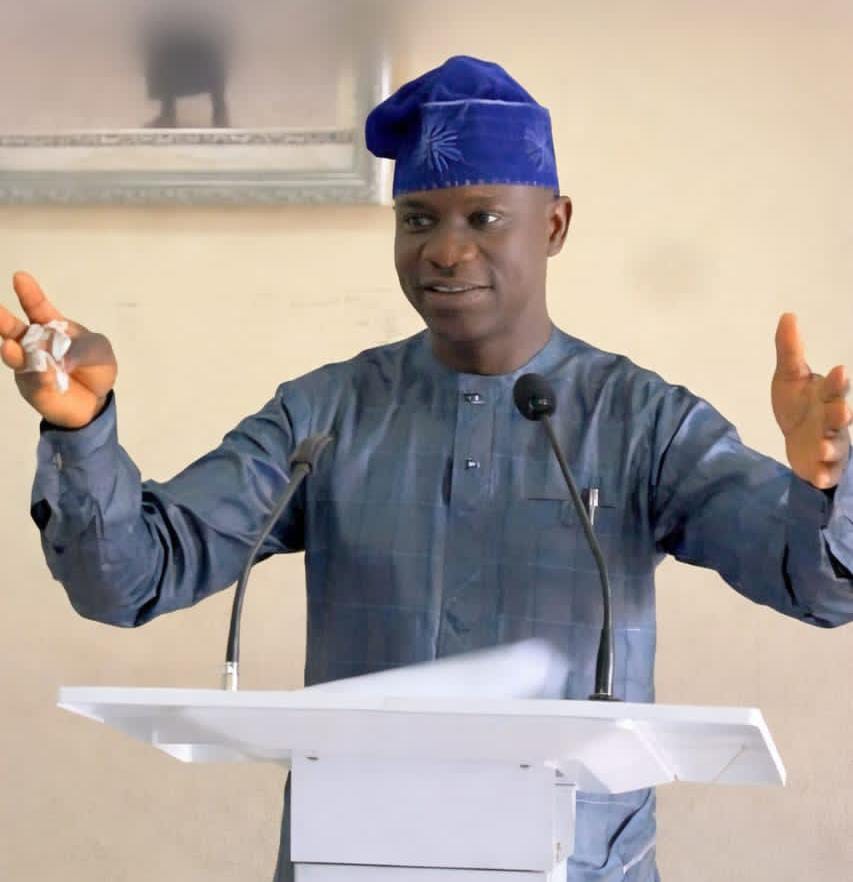
The elevation of Saheed Amusa to the rank of Professor at Obafemi Awolowo University (OAU), Ile-Ife, has continued to attract tributes from colleagues and friends, many of whom describe the milestone as the natural culmination of years marked by intellectual discipline, clarity of purpose, and unwavering dedication to scholarship.
Among those celebrating the achievement is Dr. Femi Bolaji, an international consultant and life coach, who studied alongside Amusa as part of the pioneer set of the Department of History and International Studies at Adekunle Ajasin University, Akungba-Akoko, in 1999.
Reflecting on their early days, Bolaji recalled that the first cohort of students entered the newly established department amid uncertainty. For many, admission into the programme was not initially by deliberate choice.
“I came to the university intending to study Law, but my JAMB cut-off mark denied me entry into the course. Suddenly, I found myself in History and International Studies. Like many others, I was unsure of what the future held,” Bolaji recounted.
According to him, that mixture of anxiety and exploration defined the pioneer experience. Yet, even in that atmosphere of uncertainty, one student stood apart.
“Among us, only one person was certain about studying History. He applied intentionally. The rest of us found ourselves there by circumstance. Saheed was different.”
Bolaji described Amusa as quiet, humble, disciplined, and intellectually magnetic. His grasp of historical analysis, he noted, was so deep that fellow students sometimes felt he was operating at a different level.
“Sometimes it felt like he already knew the subject and had only come to collect his certificate. He became the benchmark for many of us.”
The academic excellence was not accidental. Though Bolaji maintains that Amusa deserved a First-Class degree, he nevertheless graduated as the best student in the department, an achievement that earned him admiration from both lecturers and classmates.
Bolaji also paid tribute to the lecturers who nurtured the pioneer set, especially the late Prof. Stephen Arifalo, who served as a father figure and Head of Department during the formative years. According to him, the encouragement and stability provided by the lecturer laid the foundation upon which students like Amusa built lasting academic careers.
He also recognised Mr. Sanya Faboyede (now Prof. Faboyede) for his foundational role in shaping the academic culture of the young department. From Parts II to IV, Bolaji recalled that the cohort benefited from the intellectual mentorship of Mrs Olugbemi, Messrs. Ehinmore, Ogen, Ehiabhi, Afe, and Okajare, all of whom have since risen to the rank of Professor.
According to him, the collective influence of these scholars created a rigorous academic environment that demanded discipline, sharpened critical thinking, and laid the foundation for future excellence.
Beyond academics, Amusa demonstrated leadership and loyalty among peers. During Bolaji’s campaign for Director of Finance in the Students’ Union Government, Amusa, then serving as one of the Amirs of the Muslim Students’ Society, mobilised considerable support.
“He single-handedly mobilised Muslim students across campus. His support contributed significantly to my victory,” Bolaji said.
While Amusa left the university with distinguished academic honours, Bolaji jokingly recalled that he departed with a different blessing.
“Saheed Amusa came out with a brilliant grade, and I came out with a beautiful and wonderful wife, Oluwabukola, who was also the best female student in our department at that time.”
Looking back at Amusa’s elevation to professorship at OAU, Bolaji said the milestone surprised no one who knew him during his undergraduate years.
“To many of us, this is not surprising. If anything, some of us felt it should have happened earlier.”
He linked the achievement to the timeless principle popularised by Napoleon Hill in Think and Grow Rich:
“Whatever the mind can conceive and believe, it can achieve. Saheed’s journey clearly reflects that truth.”
Describing Professor Amusa as a proud representative of their pioneer class, Bolaji concluded with deep admiration:
“You are a hero to us, to the department, and to the university. Thank you for representing us well. Congratulations once again, Professor Saheed Amusa.”