By Allen Sowore Esq
Earlier this year, as Ondo State celebrated its Golden Jubilee, a profound question echoed through the various activities marking the historic milestone: What will Ondo State look like in the years ahead?
Two programmes, in particular, sought to answer that question.
The first was a lecture titled “Ondo State: Yesterday, Today and Tomorrow,” delivered by the renowned economist and Chairman of the Presidential Fiscal Policy and Tax Reforms Committee and now the Minister of Finance, Prof. Taiwo Oyedele. His message was clear and compelling: societies flourish when policies are consistent, institutions are strong, and development plans outlive the administrations that conceived them.
The second was an essay competition initiated by the then Senior Special Assistant to the Governor on Empowerment and Job Creation, Ambassador Orioye Benedict Gbayisemore. Young people were invited to cast their minds twenty years into the future and paint, in about 500 words, a picture of their dream Ondo State.
Three brilliant youths emerged victorious. Mr. Raphael Korede Akarakiri took the top prize, while Mr. Philip Balogun Eyimofe and Ms. Alabi Aina emerged as first and second runners-up respectively.
Yet one cannot help but wonder how difficult that assignment must have been.
For how does one paint the future when the canvas is still largely blank? How does one describe tomorrow when the landmarks that will define it are yet to rise from the earth?
Their imagination must have supplied what reality had not yet provided. Their pens must have travelled where development had not yet reached. It was, undoubtedly, a Herculean task.
Today, however, the story is different.
The future is no longer hidden behind the veil of imagination. It is beginning to take shape in concrete, steel, asphalt and vision.
On June 2, 2026, the Ondo State Executive Council, under the leadership of Governor Lucky Orimisan Aiyedatiwa, approved a remarkable array of legacy projects that promise to redefine the developmental landscape of the Sunshine State.
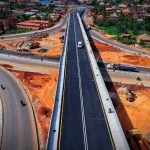
Among them is a 2.38-kilometre flyover interchange in Akure. More than a bridge of concrete and steel, it is a bridge to a more efficient and modern capital city. Stretching from Adegbola Junction to the St. Matthias/NNPC axis in Alagbaka, the structure will ease a decades-old traffic burden while becoming a defining feature of Akure’s evolving skyline.
Far away in the riverine communities of Ilaje, another vision is unfolding. A 40-kilometre canal stretching from Ugbonla to Awoye, with a spur to Idi-Ogba, will open new pathways for commerce, transportation and economic activity. It is a project that speaks not only to infrastructure but also to inclusion.
The era of fragile wooden walkways is gradually giving way to durable concrete structures. In Obenla and Idi-Ogba, communities that have long lived with the challenges of difficult terrain will soon enjoy safer and more enduring access routes.
Across Ilaje, new roads will snake through communities—Zion Pepe-Agerige Township Road, Bayo Phillips Road, Araromi Seaside Road and selected roads in Igboegunrin—linking people to opportunities and communities to prosperity.
The transformation does not stop there.
The long-abandoned Irele-Sabomi-Igbotu Road is receiving new life. New roads will connect Agadagba, Ile Ikiri and Igaligbo, all in Ese-Odo LGA. Others will open access to communities in Owo, Ondo, Idanre, Odigbo, Ifedore, Akure North and beyond.
Roads, after all, are more than strips of asphalt. They are arteries through which development flows.
In the northern axis of the state, the rehabilitation of the Ayedun-Akure/Owo Expressway, the construction of the Oba-Ikun-Afo-Idoani Road, the Imo Arigidi-Agbaluku Road and the rehabilitation of the Arigidi-Oke Agbe Road will further strengthen connectivity and economic growth.
Education, too, is receiving a bold reimagining.
The upgrade of Rufus Giwa Polytechnic, Owo, into a University of Agriculture and Technology is not merely a change of name. It is a declaration of intent—a statement that Ondo State is preparing its young people not just for today’s opportunities, but for tomorrow’s possibilities.
Healthcare is equally being repositioned for excellence. With the approval of MRI machines, CT scanners, mammography equipment, digital X-ray systems, ultrasound machines and other specialised medical facilities for the University of Medical Sciences Teaching Hospital, Ondo, quality healthcare is being brought closer to the people.
And then there is the Owena Multipurpose Dam.
For decades, it has stood as a strategic asset waiting to fully realise its potential. With the approval of counterpart funding for its rehabilitation, the dream of sustainable public water supply is steadily moving from aspiration to reality.
As I reflected on these projects after the close of work yesterday, my thoughts drifted beyond the present.
I imagined vehicles gliding effortlessly across the Akure flyover. I imagined farmers transporting produce on roads that once existed only in campaign promises. I imagined students learning in a world-class agricultural university, patients receiving cutting-edge medical care, and communities connected by infrastructure that inspires confidence and growth.
In that moment, the future of Ondo State ceased to be a distant dream.
It became visible.
It became tangible.
It became something one could almost touch.
Indeed, with the bold initiatives of Governor Lucky Orimisan Aiyedatiwa and the deliberate execution of transformational projects across the state, the future is no longer something to be guessed at or imagined. One can now confidently picture the future of Ondo State without much difficulty.
Allen Sowore Esq
Special Adviser to the Governor
(Communication & Strategy)
June 3, 2026