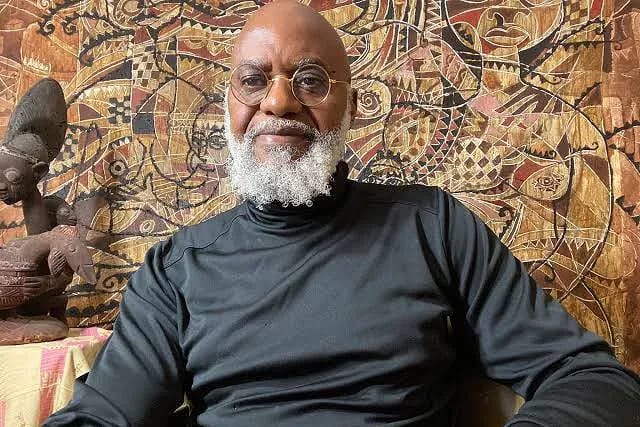
Professor Bukola Oyeniyi’s widely circulated social-media essay, “The Death of Intellectual Courage: OAU’s Cowardly Cancellation of Moyo Okediji,” went far beyond questioning the cancellation of a public lecture and book launch. It placed Obafemi Awolowo University in the dock, pronounced it guilty of intellectual cowardice, mocked its heritage and rechristened one of Africa’s most respected universities the “Obafemi Awolowo University of Cowards.”
A charge of that magnitude should rest upon a mountain of evidence. Professor Oyeniyi built his indictment while openly admitting that he had not heard OAU’s account.
His own opening contained the warning that should have restrained his pen. “According to Professor Moyo Okediji’s public account,” he wrote, before adding, “If that account is accurate-and OAU has a duty to tell the public, plainly and immediately, if it is not.” Those words acknowledged that the record before him was incomplete. They admitted the existence of an unheard side. They conceded that the truth might lie beyond the account upon which his anger rested.
Yet, Professor Oyeniyi proceeded as though every witness had been interviewed, written as if every relevant historical document had been examined, and as if the doors of scholarly doubt had been permanently sealed. By the end of his essay, OAU had been transformed into a frightened bureaucracy, its administrators reduced to trembling undertakers burying academic freedom, and Great Ife depicted as a citadel whose walls collapsed at the rumour of controversy.
His metaphors were magnificent. Unfortunately, the verdict was premature. The clarification subsequently provided by the OAU Institute of Cultural Studies, the academic unit directly involved in the proposed programme, presents a substantially different account. The Institute says no security threat prompted the cancellation. It says no letters of protest arrived from any quarters, no violence was threatened and no external pressure forced the Faculty’s hand.
According to the institute, in October 2024, Professor Okediji delivered an academic presentation titled “Ifa Infinity: Permutations Beyond 250 Iconographies” during a webinar organised by the Institute of Cultural Studies. The presentation was sufficiently impressive that the Institute expressed interest in publishing it in its academic journal. Professor Okediji declined because the presentation formed part of a larger book project then under preparation. Instead, he requested the Institute’s logo solely to acknowledge that the Institute had provided the platform where part of the work had first been presented.
Then, in mid-2026, Professor Okediji informed the Dean of Faculty of Arts, Professor Gbenga Fasiku, that the book had been completed and expressed his desire to deliver a public lecture and launch the publication at the Faculty of Arts. The response came as encouragement rather than rejection.
Despite a demanding Faculty calendar, the Dean embraced the idea. The proposal was referred to the Faculty Seminar Committee. Planning commenced. A date was selected. Invitations were issued. The Faculty prepared to provide the book with precisely what universities exist to provide, which is an arena for intellectual engagement.
This is an important part of the story because it sits uneasily beside the allegation that the University was instinctively afraid of difficult ideas. Institutions that fear scholarship rarely volunteer to organise public lectures around it. The turning point came during preparations. Members of the organising committee discovered that the published book identified the Institute of Cultural Studies, Obafemi Awolowo University, as its publisher.
The name of a university on the title page of a book carries the weight of a seal of institutional responsibility, and it cannot be treated as decorative embroidery. A publisher does more than place ink on paper and bind pages together. Its imprint tells the world that a relationship exists between the institution, the manuscript and the process through which the work entered the public domain. It implies consent. It carries legal, editorial, ethical and reputational consequences.
When an academic institute appears as publisher, readers are entitled to assume that the manuscript was submitted, considered and approved through recognised procedures. Editors may have reviewed it. Specialists may have recommended revisions. Rights and obligations may have been defined by agreement. The institution, through authorised officers, may have accepted responsibility for the publication.
According to the Institute’s clarification, none of these steps occurred.
The full manuscript had never entered its editorial process. No publishing agreement had been signed. No approval had been granted for the Institute or OAU to appear as publisher. The logo, in the Institute’s understanding, had been supplied for acknowledgement of the 2024 webinar, not as a licence to carry the University’s publishing identity.
The issue reached far beyond a comma misplaced in an acknowledgement page and went to the heart of institutional integrity.
When the Dean raised the issue, Professor Okediji reportedly maintained that his earlier communication with Professor Fasiku and the release of the logo supported his understanding. Professor Fasiku maintained that no authority to publish the book under the Institute’s name was ever muted or discussed. The book, he further observed, was substantially different from the paper presented in 2024.
Here, finally, is the disagreement that Professor Oyeniyi’s article should have investigated. He should have investigated the two parties with different understandings of an earlier interaction, an institutional logo whose purpose was interpreted differently, and should have investigated a publication carrying a university identity that the relevant academic unit said it had never authorised.
There is abundant room for verification, before writing, but Professor Oyeniyi instead reached for a flamethrower and launched his heaviest academic artillery at a scholarly empty field. His article is remarkable for the distance between its certainty and the evidence he had gathered. He knew OAU had not yet been heard. He said so. Still, he constructed a moral inferno and threw an entire university into it.
The controversy consequently reaches beyond a disagreement between public intellectuals. Professor Oyeniyi is a Professor of History. His profession is built upon suspicion of the first narrative. Historians know that eyewitnesses may be sincere and imperfect at the same time. We know that memory is selective, testimony is situated and every controversy produces its own vapour. We ask who spoke, who remained silent, what document exists, which account can be corroborated and what motive may shape the story before us.
Thucydides warned against carelessly accepting reports during the Peloponnesian War. Ibn Khaldun understood that partisanship and exaggeration could corrupt historical transmission. Marc Bloch taught historians to interrogate sources rather than bow before them. The Ibadan and Ife Schools of History built their finest achievements upon the painstaking recovery, comparison and criticism of evidence.
A historian does not hear one bell and declare the entire hour.
Professor Oyeniyi was entitled to be alarmed by the cancellation. He was entitled to defend academic freedom and insist that controversial scholarship should be debated rather than buried. He was entitled to demand an explanation from OAU. The etiquette of his own discipline, however, did not entitle him to transform an unanswered question into a settled fact and an incomplete record into a public execution.
Academic freedom remains sacred. Professor Okediji’s work deserves reading, criticism and vigorous engagement. Universities should never become mausoleums where difficult ideas are laid to rest beneath polished mission statements.
Institutional consent is equally sacred. No scholar, however distinguished, acquires an automatic right to name a university institute as publisher without the procedures through which such authority is granted. The freedom to produce knowledge does not carry a blank cheque drawn upon another institution’s name.
For 65 years now, Great Ife has been built by the labour of scholars, students, artists, scientists, administrators and workers whose lives have become part of our intellectual landscape. Our reputation reaches beyond a slogan hanging above the university gate.
Ours lives in classrooms where generations learned to question power, it can be seen in drama and music studios where African art found audacious expression, it is well entrenched in our language laboratories where knowledge advanced, and in our departmental libraries where the patience of scholarship survived the impatience of the age.
Such an institution must answer when it errs. It should also be defended when it is condemned for an offence the fuller record does not support.
Reputation is built like a cathedral, stone by stone, decade after decade. A reckless phrase can set fire to its doors in an afternoon.
“University of Cowards” was crafted by Oyeniyi to travel. It was built for headlines, reposts and applause. The clarification arrived later, carrying dates, procedures and the dreary weight of explanation. However, as usual in Nigeria, false impressions gallop while corrections limp behind them.
Professor Oyeniyi titled his essay “The Death of Intellectual Courage” but before calling a university cowardly, he should have heard its account. Before writing the epitaph of intellectual courage, he should have established that courage had truly died.
Before setting fire to a citadel’s reputation, he should have confirmed beyond a shadow of doubt that the smoke was rising from the building and not from the imagination of the observer.
That scholarly patience is the road by which truth arrives.
Stephen Adewale writes from the Department of History, Obafemi Awolowo University, Ile-Ife.